Set up your workspace
Company administrators prepare the operational structure before team members begin processing shipments.
Overview
Company administrators prepare the operational structure before team members begin processing shipments.
How the roles work together
The company is the business boundary. Vendors supply the merchant and order information. Agencies handle local operations; hubs handle logistics movements between locations. Transporters carry the work assigned to them. A person signs in as a user attached to the appropriate organization and role. Changing a user assignment therefore changes the records and controls relevant to their work.
An order describes one shipment. A bag groups eligible orders and preserves their final origin and destination agencies. A transfer describes one movement between a hub or agency and another location; several transfer legs can carry the same bag toward its final destination. Keep the order barcode, bag reference and transfer reference distinct when discussing an issue.
Before acting, verify the physical situation, the record reference, current status and your assigned location. After saving, check the updated record rather than assuming the operation succeeded. Use Messages for coordination, Support for a tracked request, and Accounting for financial evidence. Public guides explain the workflow but cannot expose another organization’s records.
Steps
- Review the company information in Settings.
- Configure the hubs, agencies and transporters used by your operations.
- Add vendors and connect the correct users to their organizations.
- Review tariffs and available permissions before creating operational records.
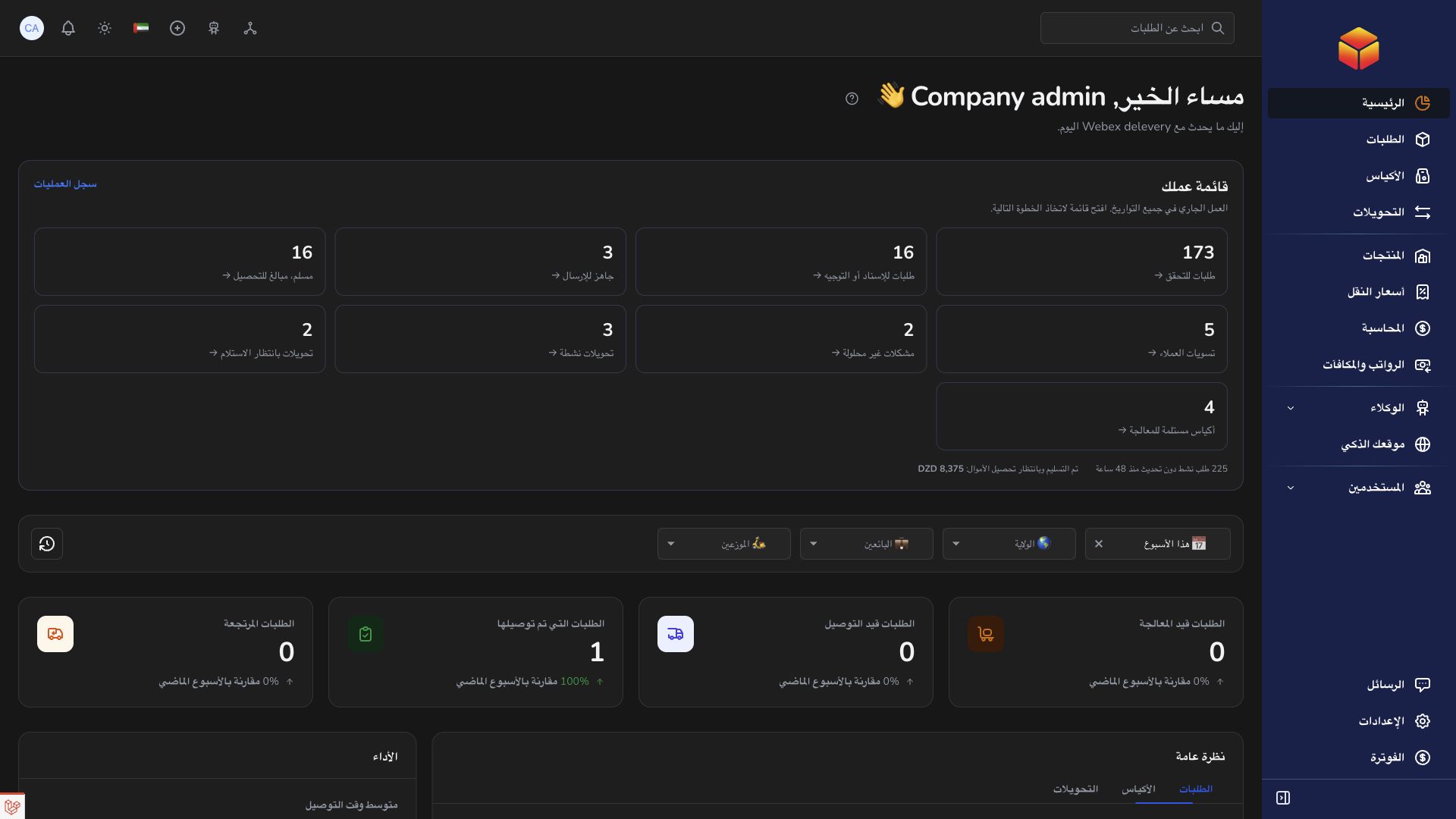
- Open the dashboard and verify that your team can see its assigned workspace.
Good to know
Some configuration is restricted to authorized company administrators. Ask your administrator if the relevant menu or action is missing.
Application links
Application links require the appropriate account access. The destination is selected for your signed-in role.