Handle delivery attempts and return exceptions
Delivery, suspension and return actions must reflect the real parcel situation and the active workflow, with enough context for the next team.
Overview
Delivery, suspension and return actions must reflect the real parcel situation and the active workflow, with enough context for the next team.
Information, statuses and handoffs
The vendor supplies the merchant context and recipient information, while the company and its assigned operational teams process the shipment. Check the customer phone, address, product quantities and amounts before sending an order into operations. A correctly entered address does not replace the organizational and route assignment shown on the shipment.
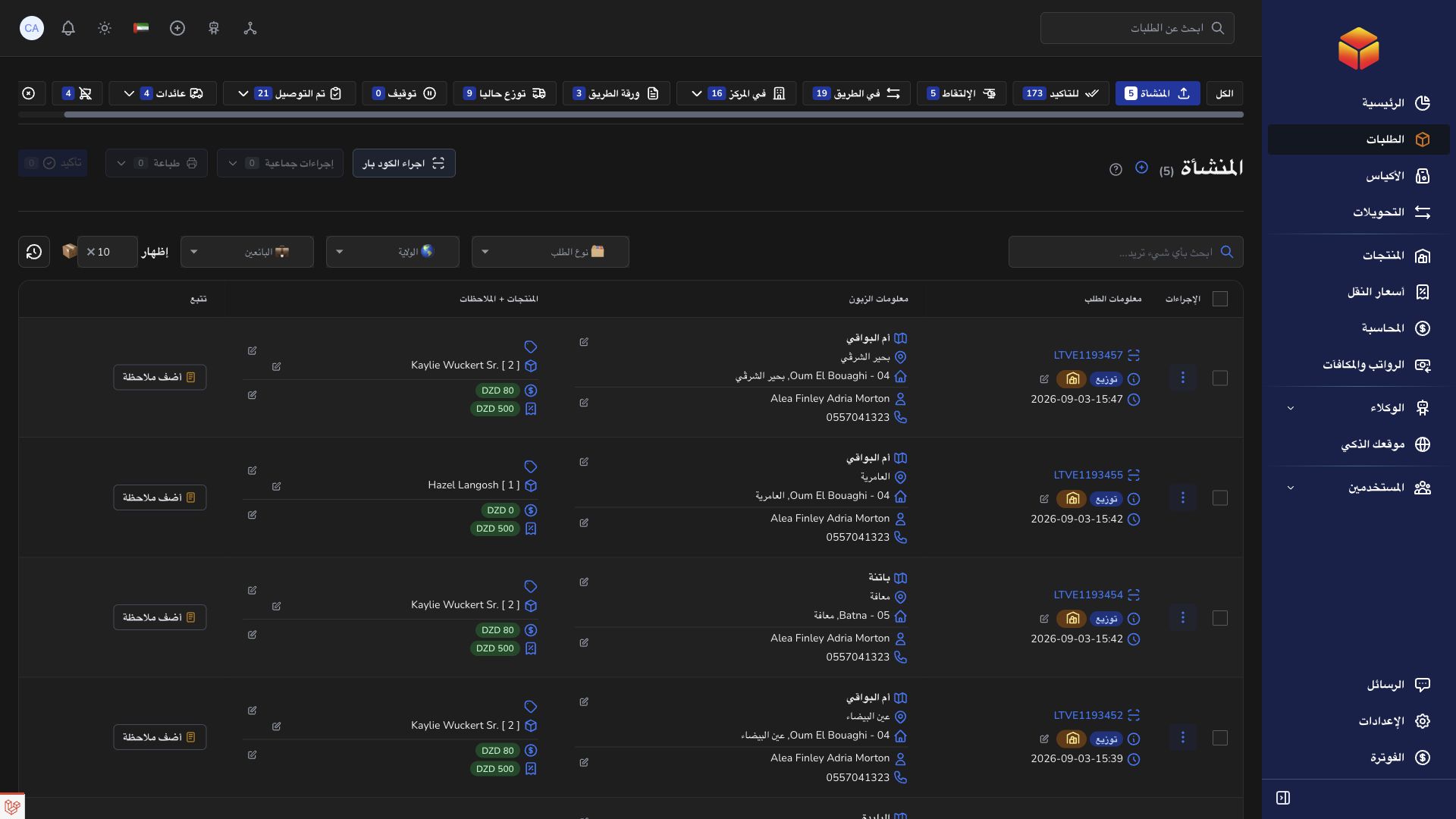
Order views include validation, transit, hub handling, roadmap or pickup work, delivery, completion and return stages. Suspended, canceled and deleted views identify different exceptions. The status history matters: two orders with similar customer information may be separate shipments at different stages. Use the barcode as the primary reference when contacting another team or asking the assistant for an exact page.
In forward bag preparation, only orders in transit or in hub are eligible. Return bags accept the supported in-hub and return stages. The order must belong to the bag’s company, match any assigned destination agency, have no current bag and be held at the bag’s preparation location. If a parcel fails these checks, inspect its current assignment instead of changing unrelated information to force it into a bag.
Steps
- Open the shipment from the in-delivery, suspended or return view and inspect its current status, attempt count, notes and assigned operator.
- Record the result of the actual contact or delivery attempt in a clear note. A failed contact, refusal and a parcel held at another location require different explanations.
- Use only the offered action for the current stage: suspension, return or back to delivery when permitted. If a next stage is unavailable, review the feedback and configured workflow instead of forcing an unrelated status.
- Follow a returning parcel through the applicable return, return-transit, returning and returned stages. Physical bag movements still need their own transfer receipt and item verification.
- At final receipt, verify the returned parcel and keep the vendor informed using the order reference. Review financial entries separately; a return status does not automatically establish that every charge or balance is settled.
Good to know
An unresolved missing parcel should stay traceable. If the physical location disagrees with the record, raise a support ticket with the order, bag and transfer references before recording a handover that did not occur.
Application links
Application links require the appropriate account access. The destination is selected for your signed-in role.