Work in the vendor workspace
Vendor accounts use their assigned dashboard, orders, products, accounting and store settings.
Overview
Vendor accounts use their assigned dashboard, orders, products, accounting and store settings.
Vendor records, products and operations
A vendor is the merchant connected to the delivery company. The vendor record holds the business context, and individual users are assigned to it. Multiple people may work for one vendor; creating duplicate vendor records for each login fragments the operational and accounting history.
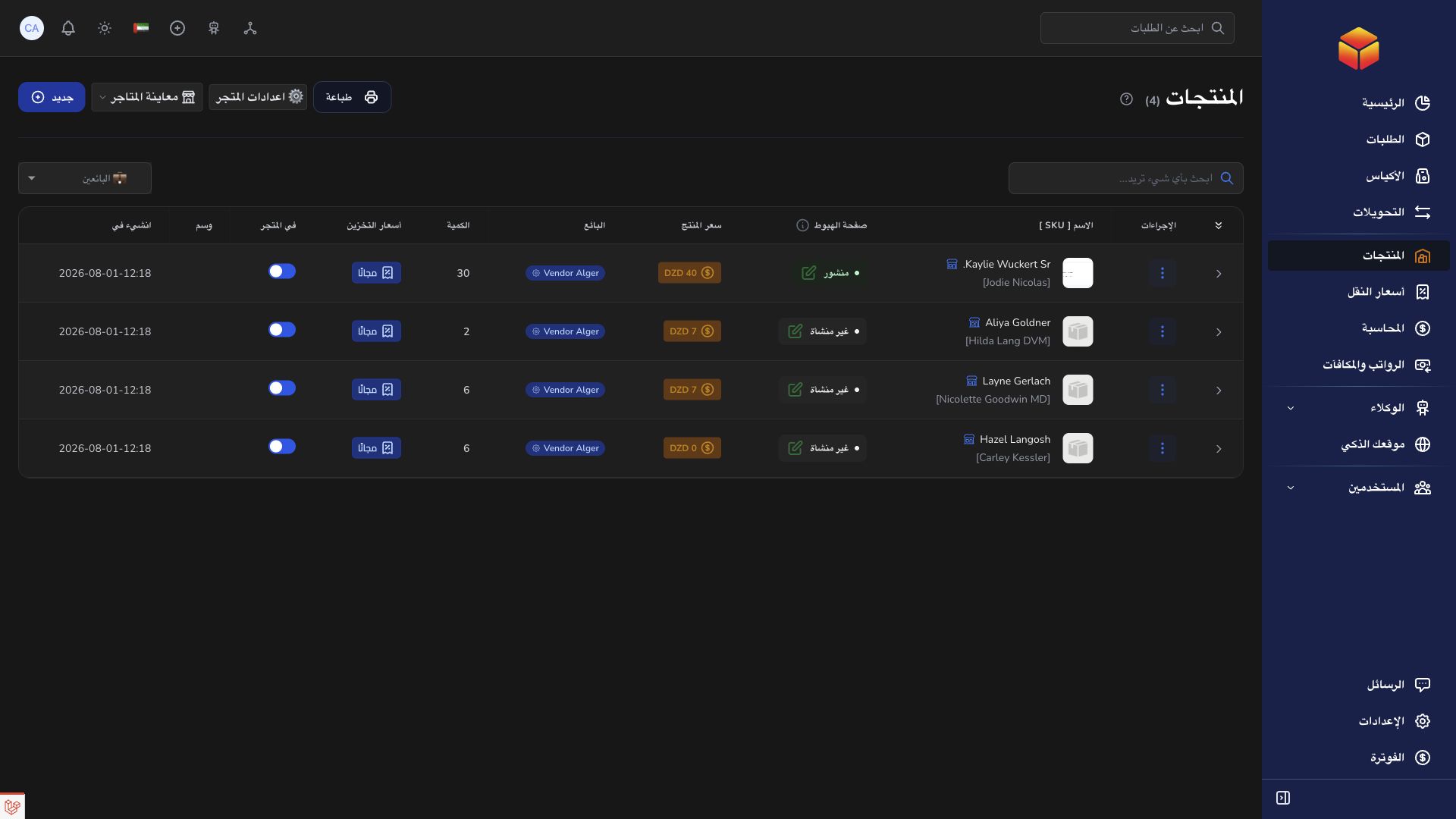
Products and orders should be connected to the intended vendor. Check the assignment before saving, especially when several merchants have similar names. Store settings describe the shopping experience, while Orders records the shipments handled by the logistics network. A public store URL is different from the private vendor settings page.
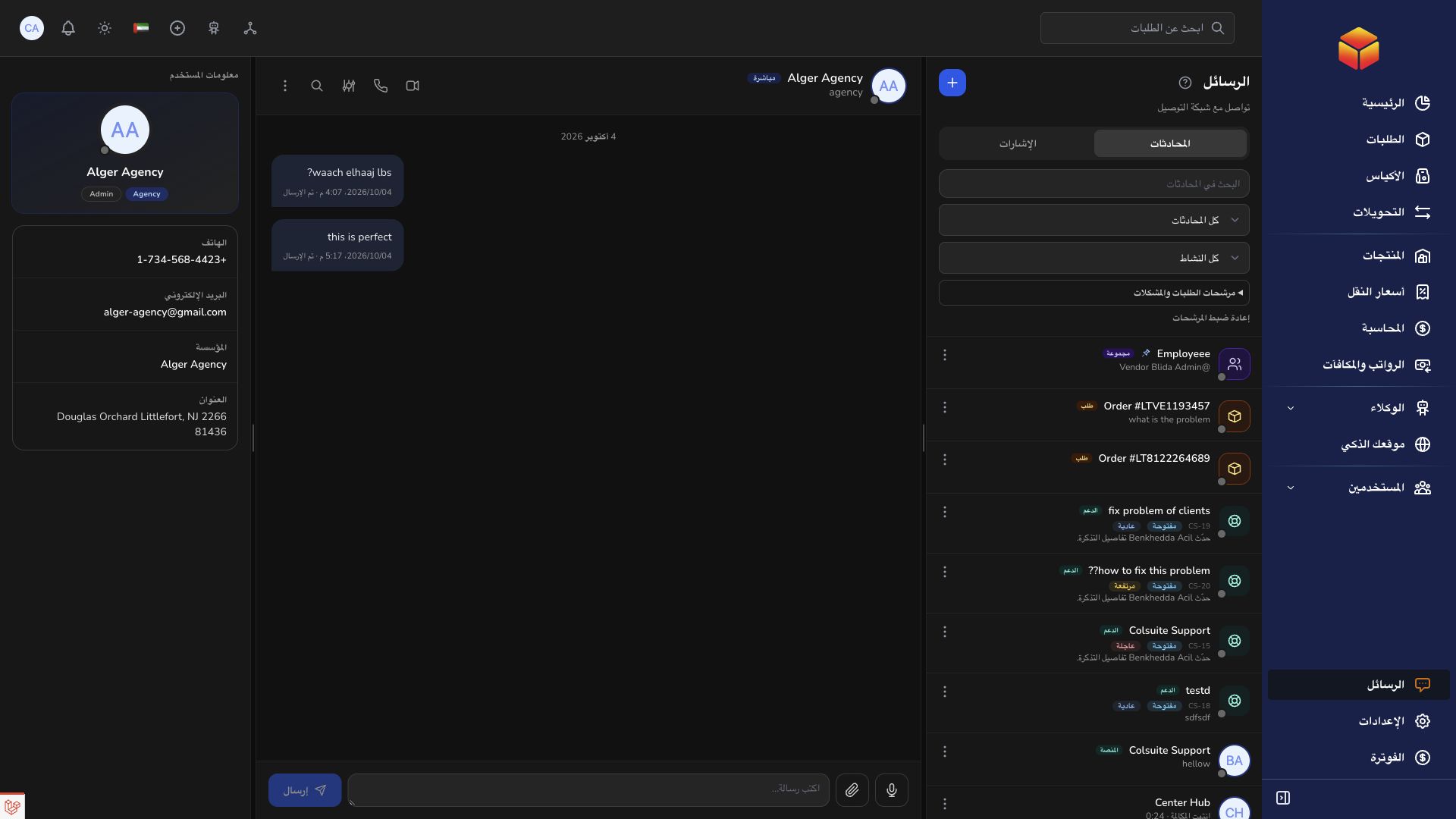
The company, agencies, hubs and transporters complete the permitted handoffs after an order enters operations. The vendor follows progress using the barcode and available history, then uses the conversation or support channel to raise a discrepancy. Review the vendor’s accounting entries separately from delivery status before interpreting balances or settlement.
Steps
- Start from the vendor dashboard and inspect the operational information shown to your account.
- Open Orders to create or follow shipments and Products to maintain the catalog.
- Use Accounting to review your available financial records.
- Open Settings or Store settings to maintain the vendor information and storefront configuration.
Good to know
Menus depend on enabled company features and your role permissions. Ask your company administrator about missing access before opening another vendor account.
Application links
Application links require the appropriate account access. The destination is selected for your signed-in role.